
Why Knowing Your Body and Asking Questions Matters More Than Ever
I didn’t expect to walk away from a TEDx event questioning how much I knew about my own body.
It wasn’t a heavy conversation. If anything, it felt surprisingly normal—like listening to things we should have already known, just finally being said out loud.
I remember sitting there, listening, thinking I had a pretty decent understanding of my health.
And then, little by little, that feeling started to shift.
Not in a dramatic way. Just a quiet realization—
how do I not know this?
I’m a 32-year-old woman, and as I looked around the room filled with women of all ages, I had a feeling I wasn’t the only one thinking the same thing.

I kept thinking back to when I was younger—late teens, early twenties—sitting in a doctor’s office, asking for help regulating my cycle.
The solution was immediate. Straightforward. Routine.
Hormonal birth control.
There wasn’t much of a conversation beyond that. No real discussion of alternatives. No sense that there were other options to even consider.
And at the time, I didn’t question it. I assumed that was just how it worked.
It wasn’t until almost a decade later, in a casual conversation with a friend, that I learned there were non-hormonal options.
A decade.
And that realization didn’t come from a doctor. It came from a woman who was brave enough to ask questions.
That stuck with me.
Because it made me wonder how many other things I didn’t know. How many questions I never thought to ask. How many times I trusted that I was being given the full picture… when maybe I wasn’t.
The more I’ve started paying attention, the more I’ve realized this isn’t just about one experience.
We’re working within a system that wasn’t built with women fully in mind.
For a long time, the baseline for medical research and treatment has been centered around men—often white men. Symptoms, treatments, and even how conditions are recognized have been shaped around that standard.
So when women experience something differently—which we often do—it can be overlooked, misread, or dismissed.
Heart attacks don’t always look the same in women.
Hormonal conditions can be brushed off as anxiety or stress.
Chronic issues can take years to be taken seriously.
Symptoms can be minimized, or explained away, instead of explored.
And none of that is because women are exaggerating or overreacting.
It’s because the system hasn’t always known how to listen to us properly.
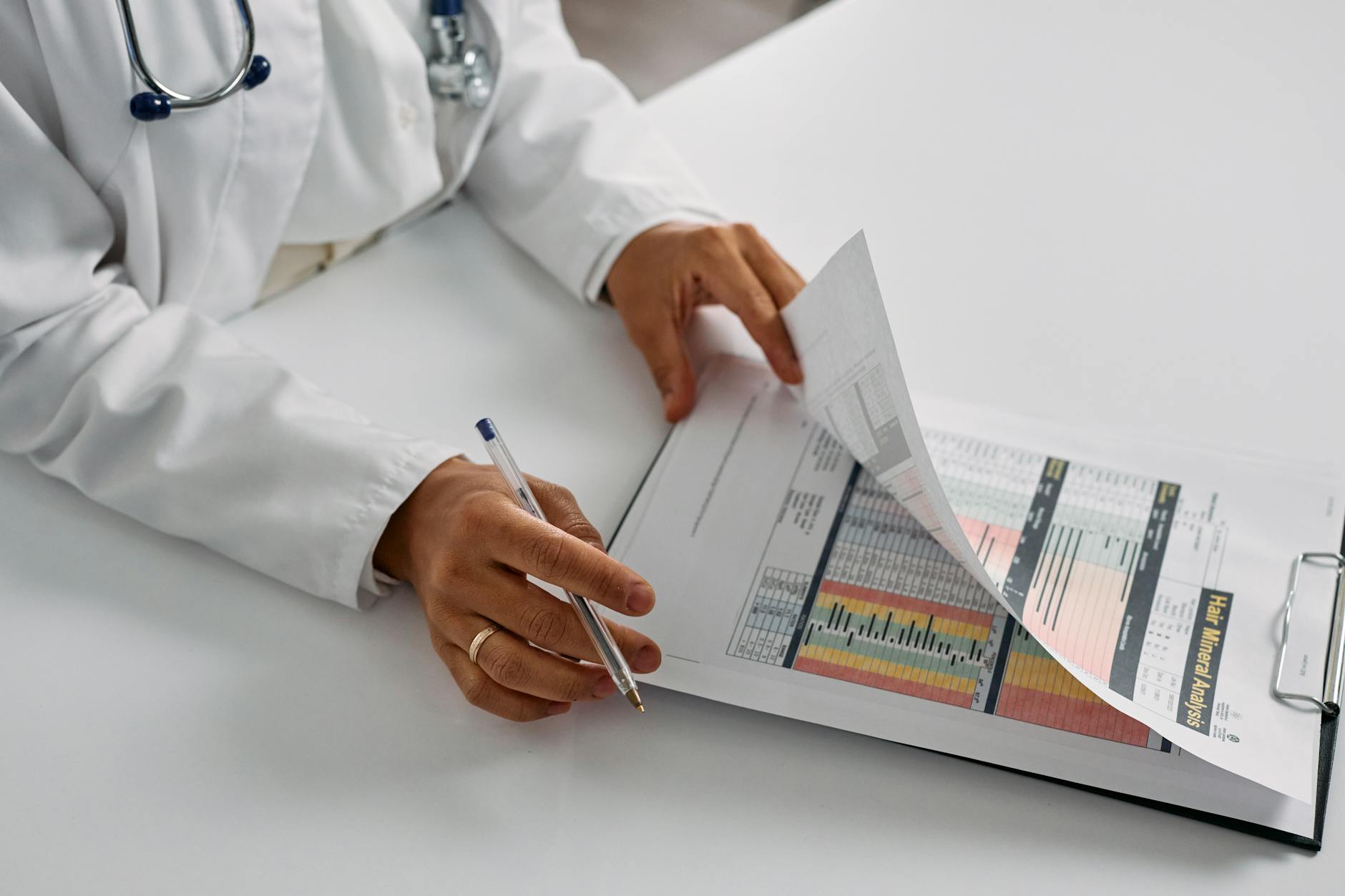
That’s frustrating. But it’s also important to understand.
Because once you start to see it, you start to move through the world a little differently.
You ask more questions.
You say, “Can we look into this a little further?”
You get a second opinion. Or a third. Or a fourth.
You trust yourself when something doesn’t feel right—even if you can’t fully explain why.
Because the truth is, a lot of women do know when something isn’t right. They know their bodies. They feel the difference.
Sometimes what’s missing isn’t awareness—it’s being heard. It’s finding the right doctor who will listen, and knowing the right questions to ask.
And if we’re being honest, part of the problem is how quietly we’ve been taught to hold these conversations.
There’s still so much shame around talking about our cycles, our sex lives, fertility, and menopause—as if these are things to be whispered about, or avoided altogether.
But they’re not shameful.
They’re normal. They’re part of our lives. And the more openly we talk about them, the more we learn from each other—and the less alone we feel in the process.
Being open. Being honest. Sharing your experience, even when it feels small or uncertain—that matters more than we think it does.
Because sometimes the most helpful information doesn’t come from a textbook or a doctor’s office.
Sometimes, it comes from another woman simply saying, “this is what happened to me.”
And that kind of honesty can make someone else feel a little less alone, and a lot more empowered to speak up.
A few things worth knowing:
• Women are more likely to be misdiagnosed during a heart attack, in part because symptoms often present differently than the “typical” signs studied in men. (EurekAlert! research on heart attack misdiagnosis)
• Polycystic ovary syndrome (PCOS) affects roughly 10–13% of women of reproductive age and many remain undiagnosed or misdiagnosed, reflecting gaps in clinical awareness and testing. (World Health Organization fact sheet on PCOS
• Women remain underrepresented in clinical research, which contributes to gaps in understanding how conditions and treatments affect women differently from men. (NCBI / PMC article on women in clinical trials)
 The Lovely Ordinary
Leave a comment